
Hands-On History
The Hands of Sean Perry leaves its mark on Asheville’s historic buildings
For most people, an old building is just that: an old building. For Sean Perry, it’s a conversation across centuries.
Sean has spent three decades uncovering what lies beneath the surface of some of the city’s oldest structures — layers of wallpaper, salvaged heart pine, worn stair treads and the stories they carry. His latest featured project, a 1925 bungalow in north Asheville, is only the most recent chapter in a career defined by celebrating, learning from and honoring the work of craftsmen who came before.
“So many people have lived in these homes, so many generations have passed through,” Sean said. “Those are considerations that I have when working on historic properties — a respect for generations of people.”
Buttressing 37 Biltmore
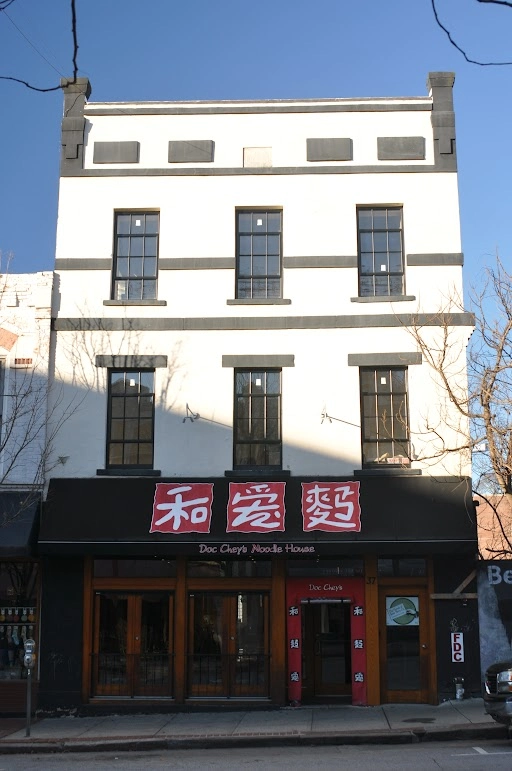
That perspective was shaped in large part by a project Sean and the team completed in 2015: the renovation of the upper two floors of 37 Biltmore Ave., widely regarded as one of downtown Asheville’s oldest remaining commercial buildings. Dating to approximately 1845, the building has housed a grocery, a furniture company and, at the time, was the home of Doc Chey’s Noodle House prior to its closure in 2016.
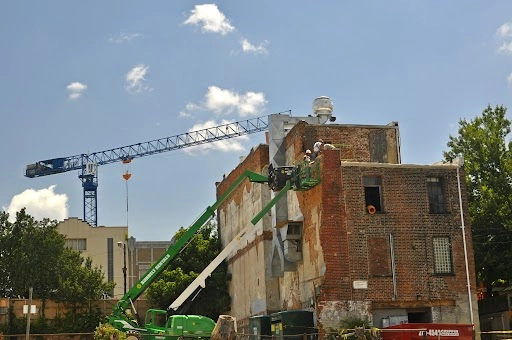
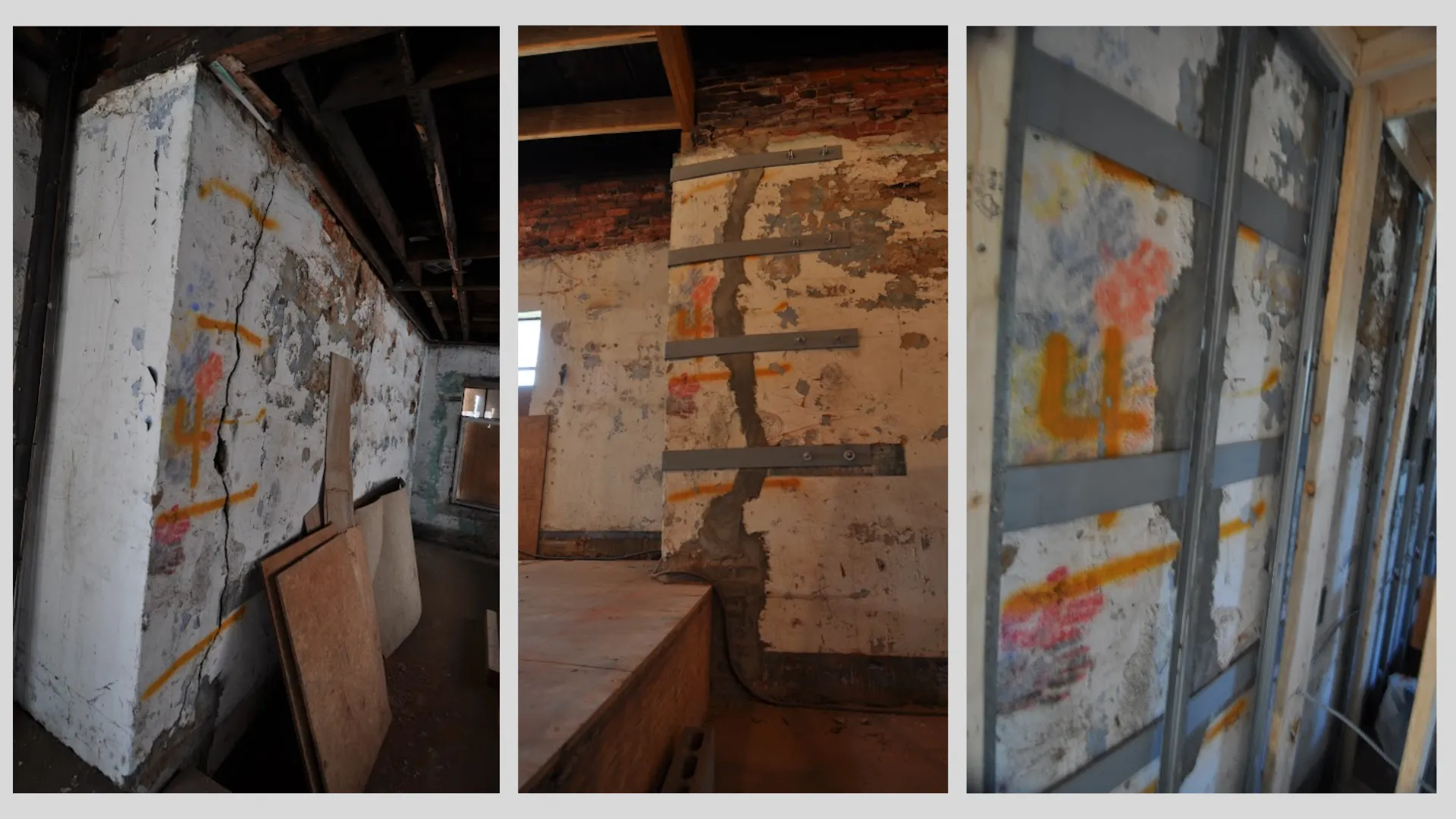
What Sean found when he stepped inside was a building in serious structural distress. Its neighbor immediately to the north had been demolished — likely after a fire, he recalled — and the loss of that adjoining structure had caused 37 Biltmore to shift and twist in ways that had gone unaddressed for years.
“When it lost its sister, it suffered structurally. It had essentially racked the entire building,” he said.
The firm’s work was extensive: They recoated the roof, significantly reframed portions of the roof structure, replaced the building’s historic steel windows with energy-efficient replicas matching the original streetscape appearance, added all-new mechanical systems, and built out three or four residential units across the two floors. Most crucially, they bolted the building back together structurally — work Sean describes as incredibly satisfying.
“The structural work and structural masonry we did to it was so in depth,” he said. “It felt rewarding to stabilize such an old structure in our community for future generations.”
History uncovered
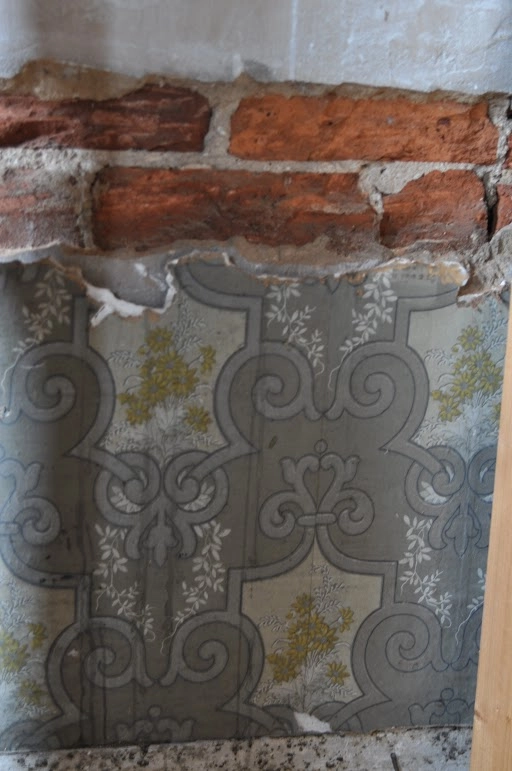
As the crew worked through the building, they found what Sean calls the quiet rewards that draw him to older structures in the first place: layer upon layer of Asheville’s history, the physical record of the building’s many lives.
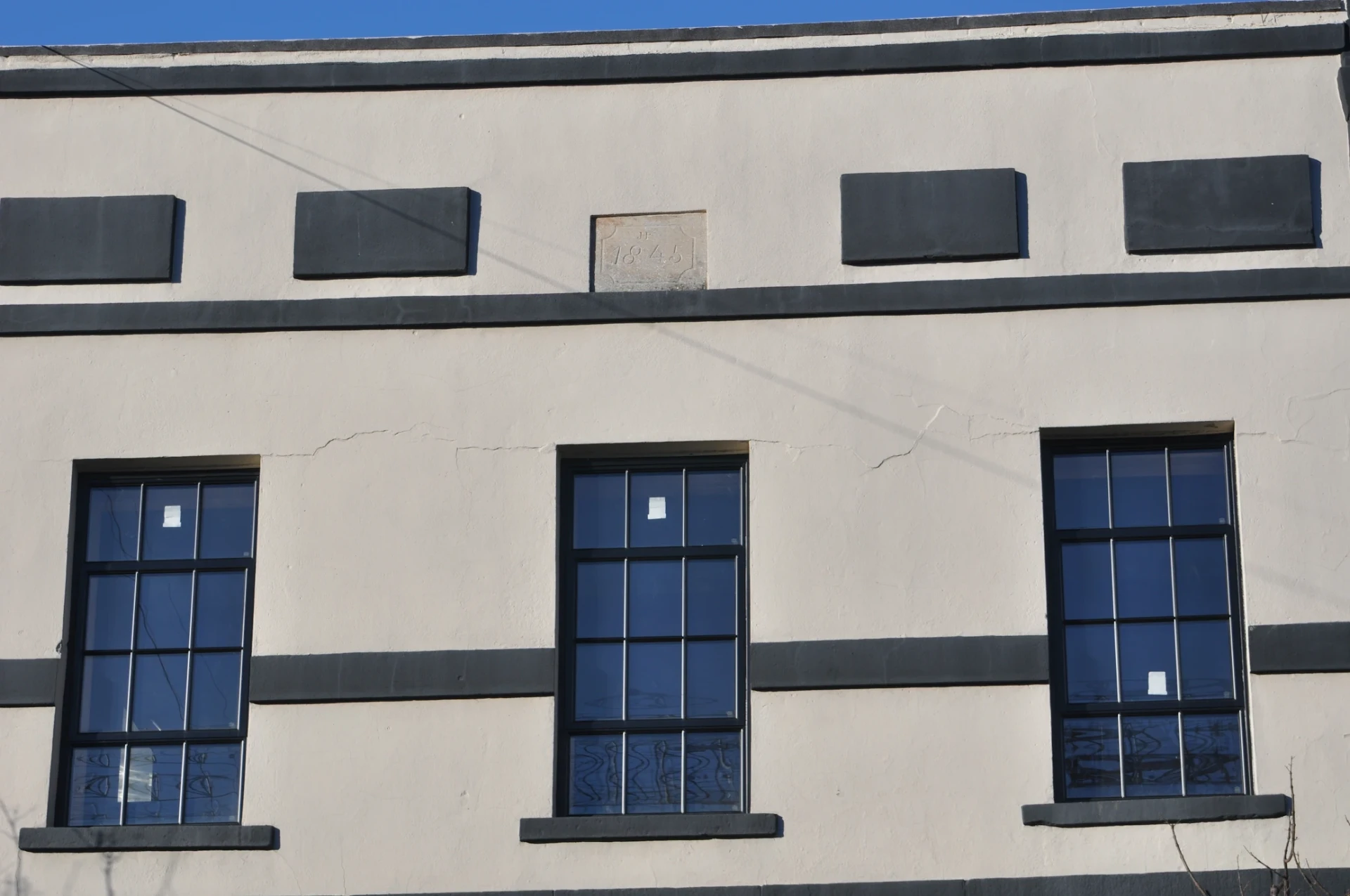
Though some historical debate surrounds which downtown structure can claim the title of oldest, a placard along the building’s facade bears the date 1845. Standing inside a building with that kind of history, he said, carries a particular weight.
“When you’re inside, removing layer upon layer and revealing these old wallpapers, you get to really know the structure that you’re in on a level that most people never get to see,” Sean said. “That’s kind of what gets me — this was downtown way back then. You almost imagine yourself standing in some saloon,” with horse-drawn carts and carriages kicking up dust outside.
Much of the structural lumber that had to be removed from 37 Biltmore didn’t end up in a landfill. Sean and the team salvaged as much as they could, recognizing that the old-growth heart pine framing — pulled from roof trusses, floor systems and the building’s bones — represented something irreplaceable.
“That was our original forest — our virgin forest from around here,” he said. “Perhaps it came from around what is now Biltmore Village, where there were sawmills at the time.”
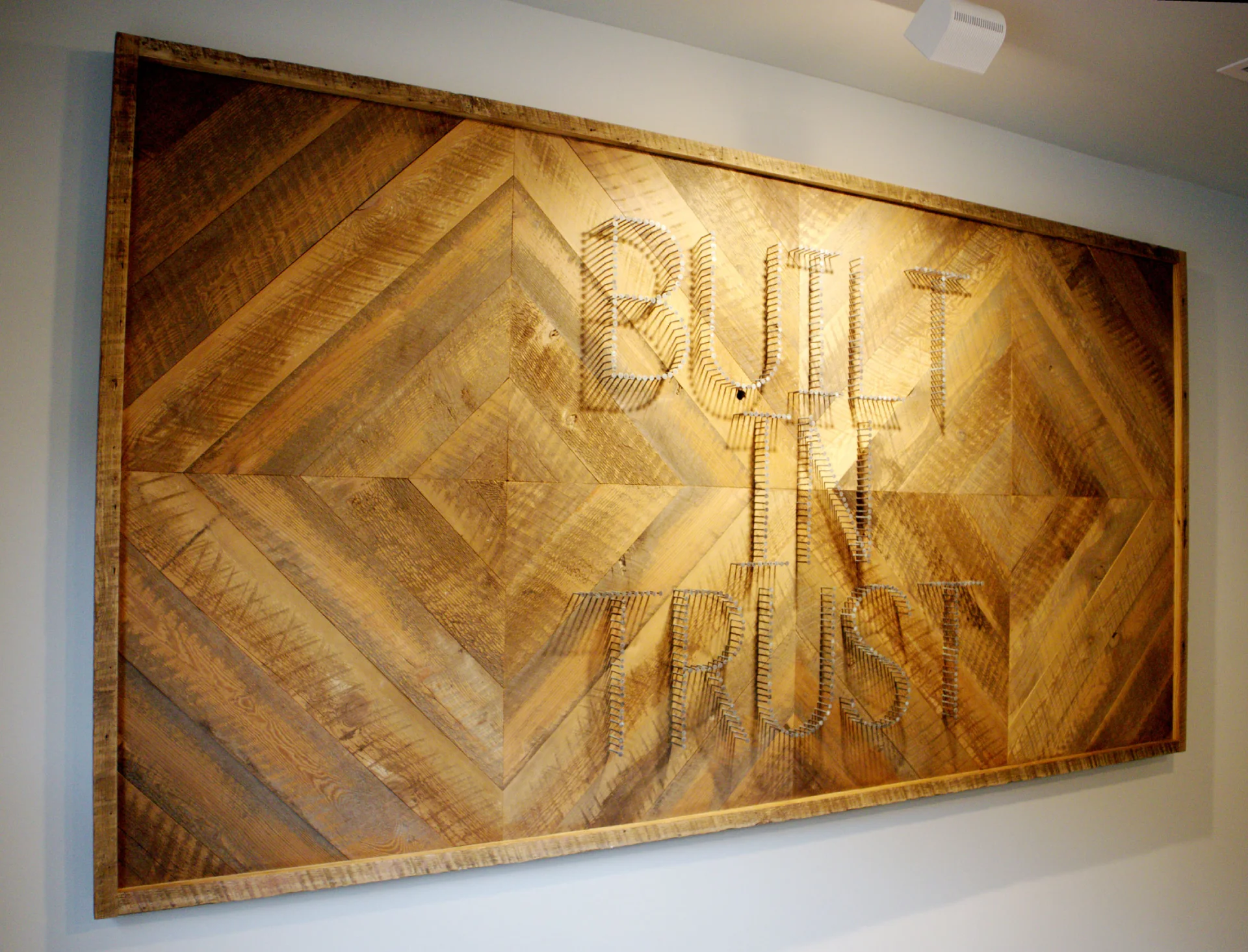
Over the years since, that salvaged wood has found its way into multiple projects: open shelving in clients’ homes, a hanging bed for a front porch, siding on a shed at Sean’s camping property. Most notably, it became the centerpiece of a feature wall in The Hands of Sean Perry’s office, the “Built In Trust” installation, where the letters are formed from nails set into planks of original 37 Biltmore lumber.
“It was a really nice way to give a nod to that era, and also do something mindfully with that wood,” he explained.
A thread through the city
Sean’s connection to that stretch of Biltmore Avenue runs even deeper than 37 Biltmore. Around 1999 or 2000, early in his career when he was working as a carpenter subcontractor, he helped with renovations on the adjacent building — the one directly next to the double-decker bus on that block. The work was modest: some demolition, some framing. A small ramp he built at the entry threshold has remained in place for nearly 27 years.
But it was what he found in that building’s basement that has stayed with him far longer.
“When you went down those stairs, there was a hallway that led to a series of rooms — all framed right over the ground,” he said. The basement’s layout, with its row of small, rough-framed rooms, made Sean suspect they were used as a speakeasy — a slice of Asheville during Prohibition, hidden below street level.
What made the deepest impression, though, were the stair treads leading down to these rooms — boards worn so thin through the middle, shaped by the sheer volume of feet that traveled over them for decades, that it’s hard to imagine any other reason for their wear and tear.
“It takes so much foot traffic for that to happen,” Sean explained. “Especially with this tight-grained lumber. You just start thinking — not only, wow, this building’s been here for a long time — but also: What were all these people doing coming down into these hidden rooms below the city?”
Sean salvaged one or two of the steps, and he still has them today. “If I didn’t save them, they’d just be buried in the landfill. Someday, I hope to do something really special with them.”
Building for posterity
While The Hands of Sean Perry takes on plenty of new construction and modern renovation projects, Sean’s early career was defined in many ways by honoring Asheville’s past — including what it’s taught him about constructing buildings that last.
“Part of it is an appreciation of the craftspeople that came before, and a reuse, reduce, recycle type of mentality,” he said. “It’s really cool when you get to dig in and find things. You never know when you’re going to find something, and you can create a story in your head of the previous residents based on the clues you have.”
Once, his team found a carpenter’s signature hidden in a wall, written nearly a century ago. Sean’s team tried to trace the carpenter through city records and Facebook groups, eventually concluding he likely lived across what is now Pearson Bridge Road in Emma — perhaps making the trip to the job site in Montford by horse or bicycle. (Back then, Pearson Bridge Road led into Montford and connected to what is now Pearson Drive.)
“When people leave a note ahead — like, ‘Hey, what’s up, future generation’ — that really gets me,” he said. “And that’s why we’re always signing our name and leaving a date on projects, too. I hope that when our work is uncovered by future generations, people will think, like I often do, about how good we did with the materials we had at the time. Maybe they’ll even recognize our name from work in other areas around town and think ‘Wow, this team really gave us good bones to work with here.’”